Background

After a stroke, taking part in activity helps patients recover. However, when they are in hospital, patients can spend a lot of time inactive. This can result in boredom and low mood.

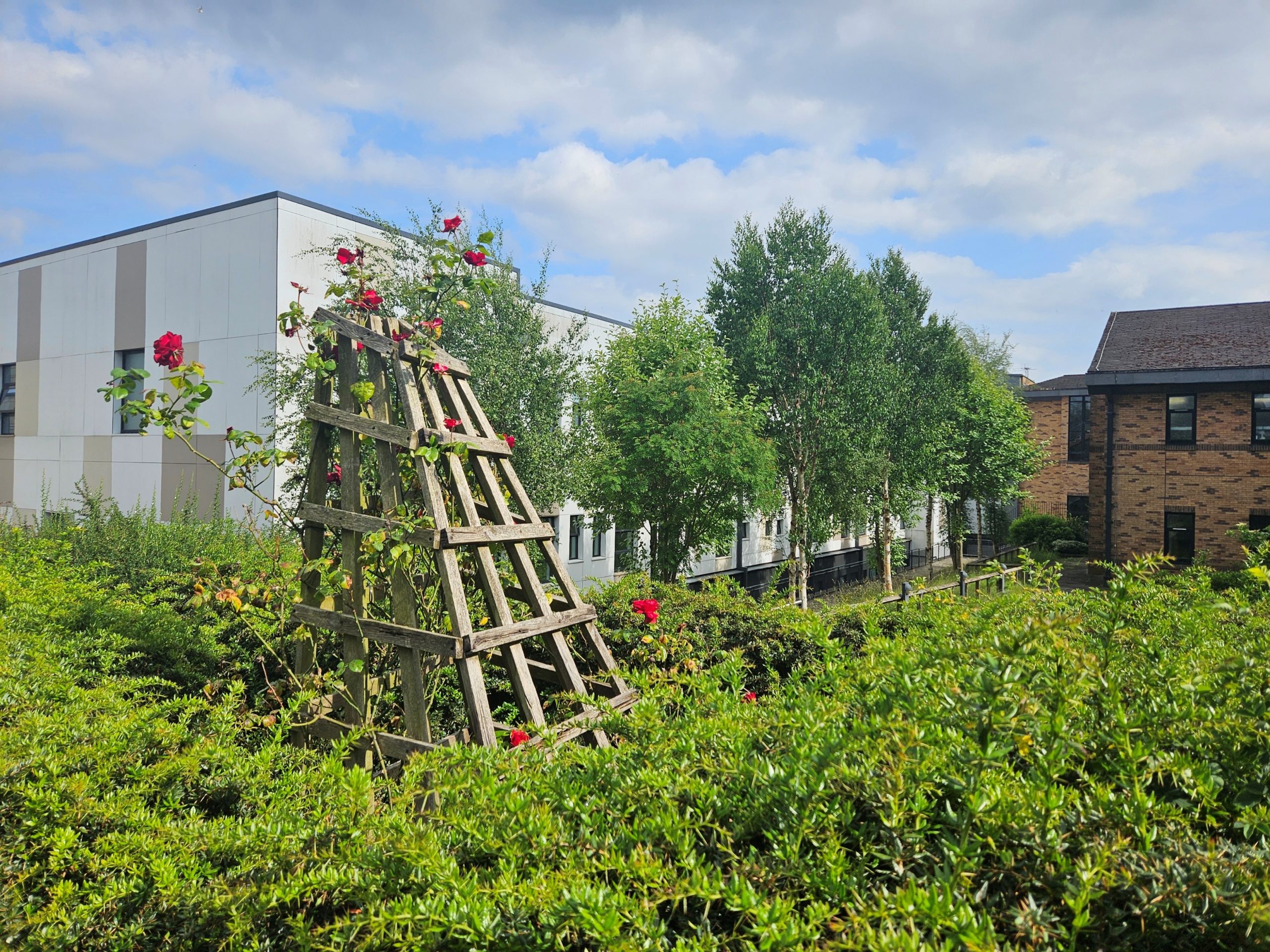
Research suggests that green spaces such as gardens can help people in hospitals. They can provide a stimulating place to do activities, exercise, and connect with other people. They can also improve well-being. However, this topic has received little attention in stroke care. Using green space may help patients to do more activity. It may help staff to provide more therapy, or to provide therapy in different ways. This could improve patients’ experiences. However, there may be problems, like getting around the spaces and the weather.

Aims & Objectives

We aim to explore the potential impact of green spaces for in-patient stroke units.
Objectives:

  • To explore whether and how hospital-based green spaces could be beneficial for people with stroke, their family/friends and staff using behavioural mapping and qualitative interviews;
  • To identify the important features of green spaces that make a difference;
  • To make recommendations for using available spaces and designing new ones.

Methods

We will work with three hospitals in different places (in the city or countryside) with different types of green spaces using a mixed-methods case study approach. The green spaces will include ones which: are used for therapy; have been designed specifically for stroke survivors; are new or have been there for a long time. We plan to:

  • Understand who uses the green spaces, how they use them and how much, through behavioural mapping.

A researcher will observe the spaces for ten days and record who uses them and their main activities, so we know what the spaces are used for. We will do this twice in each space, in different seasons, to see if this makes a difference.

  • Explore the views and experiences of stroke patients, their families/friends (visitors) and staff about using green spaces through qualitative interviews.

We will interview ten patients and ten visitors who have used each green space. These people will be from different age-groups and backgrounds and have different problems caused by their stroke, such as aphasia or physical problems. We will ask what makes it easy or difficult to use the space; their likes and dislikes; what they do and how they feel when using the space. We will speak to them in the space if possible and again after they have returned home from the hospital. We will also interview patients who have not used the space to understand why. We will interview ten stroke staff at each hospital to ask for their opinions. We will ask them about using the space, both with and without patients. We will ask similar questions to those we ask patients.

  • Bring these results together to understand the important features of beneficial green spaces after stroke that could be tried in other settings.
  • Produce recommendations for other stroke units.

We will run expert groups in three different areas of the UK. We will invite stroke survivors, carers and staff
from these areas to contribute. We will present our findings about how spaces are used and the experiences.
Together, we will develop recommendations regarding the utility of green spaces for stroke in-patients, visitors, clinical staff, and meeting net zero commitments as part of the Greener NHS programme.

Partners & Collaborators

Investigators

Prof Anne Forster (Chief Investigator)
Dr Tom Crocker (Co-lead)
Dr Louisa-Jane Burton
Liz Hill
Mick Speed
Anna Walsh
Emma Myers
Prof Peter Coventry

List of Collaborators

  • University of Leeds
  • Bradford Teaching Hospitals NHS Foundation Trust
  • Leeds Teaching Hospitals NHS Trust
  • Homerton University Hospital NHS Foundation Trust

Timescales

01/10/2025 – 30/09/2027

Funding agency

The Stroke Association

Further information

Funding acknowledgement and disclaimer (where applicable)

This study is funded by a Project Grant from The Stroke Association (ref: PG2S22_100003)

Contact details:

Dr Tom Crocker